Wednesday, 1 July 2020

Islamabad High Court reserves verdict on petition against Ghulam Sarwar

viation Minister Ghulam Sarwar
The Islamabad High Court (IHC) on Wednesday reserved a verdict on maintainability of a petition seeking to stop Aviation Minister Ghulam Sarwar Khan from performing his duties.

IHC Chief Justice Athar Minallah took up the petition that requested the court to constitute a judicial commission to conduct a comprehensive investigation into the issue of dubious licences of pilots.

Advocate Tariq Asad, the petitioner, contended before the bench that Aviation Minister Ghulam Sarwar’s statement about alleged fake or improper licences of pilots has dented the image of the country.

He impleaded the prime minister, the National Assembly speaker, Ghulam Sarwar Khan and the Civil Aviation Authority respondents through the principal secretary and the secretary aviation.

Last week, Ghulam Sarwar had revealed that as many as 262 pilots, out of a total of 860 in the country, had ‘suspicious flying licences’, who would be grounded immediately.

“Their [pilots] licences are doubtful due to certain reasons including dates of examination and exams. There are some pilots, who did not appear in any paper, out of eight, but managed to get the licences. Among them are those working with the Pakistan International Airlines (PIA), Airblue, Serene, private clubs and foreign airlines,” he said while talking to the media after presenting the interim inquiry report on the PIA plane crash in the National Assembly.


source https://www.suchtv.pk/pakistan/general/item/97940-islamabad-high-court-reserves-verdict-on-petition-against-ghulam-sarwar.html

European Union allowed PIA to operate flights

PIA
The European Union has allowed the Pakistan International Airlines (PIA) to operate flights to and from Europe till July 3, confirmed the national flag carrier's spokesperson on Wednesday.

The spokesperson said that all PIA flights to and from Islamabad to London, PK785 and PK 786 will operate as per schedule. An announcement with regard to other flights will be made soon, stated the PIA spokesperson.

He confirmed that the PIA administration, Ministry of Foreign Affairs and Pakistani diplomats were in constant contact with European authorities over the matter.

The spokesperson added that the foreign secretary had contacted European diplomats on an urgent basis after which the national flag carrier was allowed to land in Britain, Europe and fly over them as well.

PIA flights to Europe suspended for six months by air safety agency

The European Union Aviation Safety Agency (EASA) had suspended PIA's air operations permit for a period of six months, the national carrier's spokesperson Abdullah Hafeez Khan had said on Tuesday.

He had said that the suspension will take effect from July 1, at 12 noon UTC time.

"Those who have a PIA booking can move the date forward or get a refund," the spokesperson had said.

The EASA had told PIA "it is still not sure" if all the remaining pilots are properly qualified, "and thus they have lost their confidence" in the airline, the spokesperson told AFP.

"PIA is in constant contact with the agency," he had said, adding: "We are taking steps to address their concerns."

"It is hoped that the suspension will end soon due to the [remedial] steps taken by the government and the administration."


source https://www.suchtv.pk/pakistan/general/item/97939-eu-allowed-pia-to-operate-flights.html

PIA flights to Europe suspended for six months by air safety agency

PIA flights to Europe suspended for six months by air safety agency
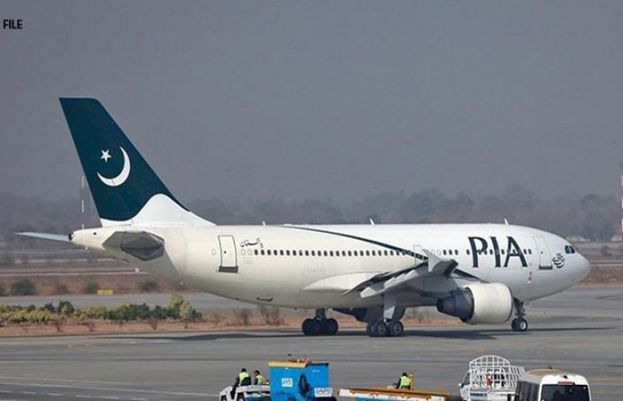
The European Union Aviation Safety Agency (EASA) has suspended Pakistan International Airline's air operations permit for a period of six months, the national carrier's spokesperson Abdullah Hafeez Khan said on Tuesday.

The suspension will take effect on July 1, at 12 noon UTC time, he said.

Therefore, all PIA flights to Europe have been temporarily cancelled.

"Those who have a PIA booking can move the date forward or get a refund," the spokesperson said.

The EASA told PIA "it is still not sure" if all the remaining pilots are properly qualified, "and thus they have lost their confidence" in the airline, the spokesperson told AFP.

"PIA is in constant contact with the agency," he said, adding: "We are taking steps to address their concerns."

"It is hoped that the suspension will end soon due to the [remedial] steps taken by the government and the administration," the spokesperson said.

In EASA's notification to the Civil Aviation Agency, the safety agency has observed that PIA's authorisation to operate in Europe was issued on May 17, 2016.

Since then, it has been a matter of routine to "assess the continued compliance" by PIA with the agency's requirements.

It said that two technical consultation meetings were held at the EASA's premises in Cologne on June 13, 2019 and September 3, 2019, following which six findings were raised.

"For all findings, [PIA] proposed corrective action plans (CAPs), which were accepted by EASA. Following the review of the evidence of implementation of the agreed CAPs, five findings were closed.

"For the remaining finding, which is related to Safety Management, [PIA] failed to fully implement the agreed CAP despite an extension of the CAP implementation period," reads the letter.

"The operator could not demonstrate having effectively implemented all elements of a Safety Management System as required by Annex 6 Part 1 and Annex 19 to the Chicago Convention."

The EASA also made a reference to Aviation Minister Ghulam Sarwar Khan's disclosure to the parliament on June 24 regarding "fraudulent" licences issued by Pakistani authorities to more than 260 out of 860 pilots.

"Based on this information, EASA is concerned about the validity of the Pakistani pilot licenses and that Pakistan, as the State of operator, is currently not capable to certify and oversee its operators and aircraft in accordance with applicable international standards," the letter said.

The EASA's letter also stated that the concerns had been forwarded to PIA on June 26, following which the airline on June 28 "proposed additional timelines (three to four months) for some of the actions".

"The provided proposals and explanations [...] are however considered insufficient by EASA," said the letter.

- The software application, proposed by the operator, for safety data management, risk assessment and analysis including the statistical analysis and the ability to identify repeated or similar hazards/occurrences is still under development.

- In addition, in response to the consultation letter sent to the operator on 26 June [PIA] indicated that the software development completion requires additional three to four months, which cannot be granted by EASA, as EASA considers that the the operator had been granted a sufficient timeline to eliminate the issues (more than nine months since the issuance of the finding).

- Insufficient evidence was provided confirming the complete implementation of the agreed CAP related to functional reporting of the Safety Action Groups (SAGs) to the corporate safety department, as it did not contain a revised policy and related procedures.

- On 23 October 2019, [PIA] issued a policy to timely address the safety reports. However, the submitted evidence revealed that since December 2019 none of these reports were processed, as for instance, the respective root causes were still not identified.

- Submitted documents related to the measurement of safety performance indicators (SPIs) revealed that some of the SPIs were controlled by different departments with different target settings.

- Furthermore, PIA provided evidence of the correction of the calculation errors of the SPIs for 2018, where EASA found some major inconsistences, and even illogical [data], for instance the input for the SPls are performed in flight hours, but the formula calculates number of landings. Furthermore, the submitted corporate SPIs does not contain all indicators measured by the departments themselves.

- EASA already granted PIA an extension of the CAP implementation deadline from 24 May 2020 to 17 June 2020.

- PIA claims that it has grounded all pilots that were part of the list of fraudulent license holders compiled by the Pakistani authorities. However, this does not mitigate EASAS's concern, as there are strong indications that a high number of Pakistani pilot licenses are invalid.

- EASA therefore no longer has confidence that Pakistan, as the State of operator, can effectively ensure that operators certified in Pakistan comply at all times with the applicable requirements for crew qualification.

PIA has been granted the right to appeal the decision within two months of EASA's notification.

It is required to pay a fee when lodging the appeal.

The appeal notification form and further instructions are available on the EASA website, according to the letter.

The move is a big blow to the airline, already under scrutiny the world over due to recently uncovered pitfalls within Pakistan's aviation industry, such as pilots possessing "fake" licences as put by the aviation minister.

The startling revelations came as the minister presented the interim report on the probe into the May 22 PIA plane crash.

Following the report, the International Air Transport Association (IATA) had expressed concern over the "serious lapse in licensing and safety oversight by the aviation regulator".

Subsequently, on June 24, the aviation minister announced that the qualifications of 262 pilots in Pakistan are "dubious" and thus they will be barred from flying, to which the EASA letter also referred.

The pilots in the line of fire include 141 from PIA, nine from Air Blue and 10 from Serene Airline.

The rest of the 262 belong to flying clubs or chartered plane services, he said. He said all the airlines and the clubs had been conveyed that: “Their credentials are dubious, and they shouldn’t be allowed to fly.”

With the back to back developments causing an international uproar, the Civil Aviation Authority of Vietnam (CAAV) on Monday said it had grounded all Pakistani pilots working in the country.

Vietnam had licensed 27 Pakistani pilots, and 12 of them were still active, while the other 15 pilots’ contracts had expired or were inactive due to the coronavirus pandemic, according to the CAAV.


source https://www.suchtv.pk/world/item/97925-pia-flights-to-europe-suspended-for-six-months-by-air-safety-agency.html

Corona cases in Pakistan rose to 213,470 , recovery rate rose to 100,802

coronavirus update
The number of confirmed Corona cases in Pakistan rose to 213,470 on Wednesday after new infections were confirmed in the country.

The province-wise break up of the total number of cases as of July 01, is as follows:

Total confirmed cases: 213,470

• Sindh: 84,640

• Punjab: 76,262

• Khyber Pakhtunkhwa: 26,598

• Balochistan: 10,476

• Islamabad Capital Territory: 12,912

• Gilgit-Baltistan: 1,489

• AJK: 1,093

Deaths: 4,395

• Punjab: 1,762

• Sindh: 1,3477

• Khyber Pakhtunkhwa: 951

• Balochistan: 121

• Islamabad Capital Territory: 128

• Gilgit-Baltistan: 26

• AJK: 30

RECOVERED: 100,802

More than 10.48 million people have been reported to be infected by the novel coronavirus globally and 509,980 have died, according to a Reuters tally.

Infections have been reported in more than 210 countries and territories since the first cases were identified in China in December 2019.


source https://www.suchtv.pk/pakistan/general/item/97936-corona-cases-in-pakistan-rose-to-213-470-recovery-rate-rose-to-100-802.html

Tuesday, 30 June 2020

Blast at Iran's medical clinic kills 19 people

Gas explosion at Iran medical clinic kills 19
At least 19 people have been killed in an explosion at a clinic in Iran's capital Tehran, officials say.

Several people were injured at the Sina Athar clinic, and there are fears the death toll will rise further.

Iran's state media quoted senior officials as saying the blast was caused by a gas leak.

Television pictures showed plumes of smoke billowing in the sky. Firefighters extinguished the blaze several hours later.

Most of the victims of Tuesday's blast were women, according to the authorities.

Some of the victims "were in upper floors, in operation rooms - who were either patients being operated on or those with them", Tehran fire department spokesman Jalal Maleki was quoted as saying by state media.

"They unfortunately lost their lives due to the heat and thick smoke," he said, adding that firefighters had rescued 20 people.

The clinic, which carries out light surgeries and medical imaging, had 25 employees inside at the time of the explosion, Mr Maleki said.

The incident comes several days after a big explosion near a military facility rocked Tehran.

The cause of that incident was also said by the authorities to have been a gas leak.


source https://www.suchtv.pk/world/item/97935-blast-at-iran-s-medical-clinic-kills-19-people.html

LHC recommends formation of committee to probe petrol crisis

Lahore High Court
The Lahore High Court recommended the government form a committee to probe the recent petrol crisis, calling on the National Assembly speaker to include members of the opposition and treasury benches in it.

LHC Chief Justice Muhammad Qasim Khan asked Attorney General Khalid Javed Khan to discuss the court’s suggestion with the speaker. He observed that the court wants the parliament to do this job on its own, otherwise, the law will take its course and no official, if found guilty, would be spared.

The chief justice was hearing a petition seeking action against concerned authorities for their alleged failure to control shortage of petrol.

The chief justice directed the attorney general to assist the court during the next hearing to determine if the speaker does not form a committee, whether a commission under the code of criminal procedure would be appropriate to hold investigation into the fuel crisis.

At the outset of the hearing, the counsel of the petitioner sought the court’s permission to withdraw the petition, saying that there was no more shortage of petrol in the country. However, the chief justice turned down the request.

AGP Khan filed an application on behalf of Principal Secretary to the Prime Minister Azam Khan for a one-time exemption from personal appearance. At this, the chief justice expressed his dismay, saying that it seems that the principal secretary should be summoned through arrest warrants.

The attorney general said the principal secretary could not appear due to meeting of federal cabinet. Referring to the principal secretary, Chief Justice Khan observed: “It is heard that the law comes out of his mouth when he speaks. If this is the case, let’s talk to him and see.”

The chief justice noted that the secretary will not be given exemption if the attorney general does not appear before the court. He questioned the manner in which prices of petroleum products increased suddenly before the end of the month.

“How much you benefited the oil marketing companies by increasing prices?” the chief justice asked the attorney general and also directed him to apprise the court on the next hearing about the capacity of the companies.

Advocate Awais Khalid, the amicus curiae, stated that the ministry of petroleum and the Oil & Gas Regulatory Authority (Ogra) were responsible for regulating the import and storage of petrol in view of the country’s demand. He said the ministry, Ogra, oil companies and people were the real stakeholders in the matter.

The CJ directed Ogra’s Chairperson Uzma Adil to deposit Rs 100,000 as donation with the hospital of the Lahore High Bar Association. She was fined for not appearing before the court on the last hearing.

On Tuesday, she had requested the court to convert the fine into a donation, which the chief justice had accepted. The hearing was adjourned till July 9.


source https://www.suchtv.pk/pakistan/general/item/97933-lhc-recommends-formation-of-committee-to-probe-petrol-crisis.html

China imposed new national security law in Hong Kong

China imposed a sweeping national security law in Hong Kong
China imposed a sweeping national security law in Hong Kong, dramatically tightening its grip on the semi-autonomous city in a historic move decried by Western nations as a threat to the financial hub’s freedoms.

Described by Beijing as a “sword” hanging over the heads of those endangering national security, the law took effect hours after it was signed by President Xi Jinping and just six weeks since it was first unveiled.

Fed up with pro-democracy protests that rocked the city last year, China’s top lawmaking body enacted the legislation following closed-door deliberations that kept details secret until its passage.

The law gives Beijing jurisdiction over “very serious” national security crimes, with offenders facing up to life in prison, according to the text published late Tuesday.

The controversial law also empowers China to set up a national security agency in the city, staffed by officials who are not bound by local law when carrying out duties.

The new suite of powers radically restructures the relationship between Beijing and Hong Kong, toppling the legal firewall that has existed between the city’s independent judiciary and the mainland’s party-controlled courts.

“It marks the end of Hong Kong that the world knew before,” prominent democracy campaigner Joshua Wong tweeted as his political party Demosisto announced it was disbanding.

“With sweeping powers and ill-defined law, the city will turn into a #secretpolicestate.”

Some Hong Kongers responded by deleting Twitter accounts and scrubbing other social media platforms.

In contrast, former city leader Leung Chun-ying took to Facebook to offer bounties of up to HK$1 million ($130,000) for anyone who could help secure the first prosecutions under the new legislation or track down people who have recently fled the city.

Twenty-seven countries, including Britain, France, Germany and Japan, urged Beijing to “reconsider the imposition” of the legislation, saying in a statement to the UN Human Rights Council that it “undermines” the city’s freedoms.

The move has also added fuel to tensions between Beijing and Washington, where condemnation of the move crossed the aisle.

Top Democrat Nancy Pelosi said its “brutal purpose” was to “frighten, intimidate & suppress the speech of Hong Kongers,” and Republican Mitt Romney tweeted that his “heart aches for the people of Hong Kong. Any semblance of freedom and autonomy has vanished.”

As part of the 1997 handover from Britain, Hong Kong was guaranteed certain freedoms — as well as judicial and legislative autonomy — for 50 years in a deal known as “One Country, Two Systems.”

The formula helped to cement the city’s status as a world-class business hub, bolstered by a reliable judiciary and political freedoms unseen on the mainland.

Critics have long accused Beijing of chipping away at that status, but they describe the new security law as the most brazen move yet.

British Prime Minister Boris Johnson said he was “deeply concerned” and that London would scrutinise the law “to understand whether it is in conflict” with the handover agreement.

The law bans four types of national security crimes: subversion, secession, terrorism and colluding with foreign forces to endanger national security.

The text gave three scenarios in which China might take over a prosecution — complicated foreign interference cases, “very serious” cases and when national security faces “serious and realistic threats.”

Cases can be passed to mainland China, with the Supreme People’s Procuratorate and the Supreme Court designating the judicial authorities handling them.

Lead perpetrators and serious offenders can receive 10 years to life in prison for engaging in one of the national security crimes.

The law also said certain national security cases could be held behind closed doors without juries in Hong Kong if they contained state secrets, although the verdict and eventual judgments would be made public.

“It’s a fundamental change that dramatically undermines both the local and international community’s confidence towards Hong Kong’s ‘One Country, Two Systems’ model and its status as a robust financial centre,” Hong Kong political analyst Dixon Sing told AFP.

On the mainland, national security laws are routinely used to jail critics, especially for the vague offence of “subversion.”

Beijing and Hong Kong’s government reject those allegations.

They have said the law will only target a minority of people, will not harm political freedoms in the city and will restore business confidence after a year of historic pro-democracy protests.

“I urge the international community to respect our country’s right to safeguard national security and Hong Kong people’s aspirations for stability and harmony,” Hong Kong city leader Carrie Lam told the UN Human Rights Council in a video message on Tuesday.

Millions took to the streets last year, while a hard core of protesters frequently battled police in often violent confrontations that saw more than 9,000 arrested.

Hong Kong has banned protests in recent months, citing previous unrest and the coronavirus pandemic, although local transmissions have ended.

Some Western nations warned of potential repercussions ahead of the security law’s passing.

However, many are also wary of incurring Beijing’s wrath and losing lucrative access to the mainland’s huge economy.

“We deplore this decision,” said European Council head Charles Michel.

Washington which has embarked on a trade war with China — has said the security law means Hong Kong no longer enjoys sufficient autonomy from the mainland to justify special status.

The United States on Monday ended sensitive defence exports to Hong Kong over the law, prompting China to threaten unspecified “countermeasures.”


source https://www.suchtv.pk/world/item/97932-china-imposed-new-national-security-law-in-hong-kong.html

testhjg