Wednesday, 30 June 2021

COVID-19: India overtakes US in vaccine milestone with 323.66 million doses administered

New Delhi: India has achieved another milestone in its ongoing Covid-19 vaccination drive by overtaking the US in terms of total number of doses administered so far, securing highest position among top six countries of the world.

India has so far administered Covid vaccine doses to 32,36,63,297 people (323.66 million) while the number of people inoculated so far in the US are 32,33,27,328. If compared to the timeline, India’s Covid vaccination drive started on January 16 this year almost one month after the similar exercise was started by the US on December 14 last year.

India’s cumulative vaccination coverage has exceeded 32.36 crores (320 million) on Sunday. A total of 32,36,63,297 vaccine doses have been administered through 43,21,898 sessions, said the Ministry of Health and Family Welfare (MoHFW) citing provisional report received till 7am on Monday. The Ministry said that 17,21,268 vaccine doses were administered in the last 24 hours.

As per global vaccine tracker report till 8am on Monday, India is at top position in terms of inoculating maximum Covid vaccines to its citizens followed by the US, the UK (7,67,74,990), Germany (7,14,37,514), France (5,24,57,288), and Italy (4,96,50,721).

Interestingly, India achieved the goal quicker despite it started the world’s largest inoculation drive one month later compared to these five countries. The drive first started by the UK on December 8 last year followed by the US while Germany, France and Italy started the exercise on December 27 last year.

The government said that the new phase of universalisation of Covid-19 vaccination commenced from June 21, accelerated the pace and expanded the scope of vaccination throughout the country.

Following the landmark achievement, Prime Minister Narendra Modi congratulated all those who are driving the momentum of India’s vaccination drive.

In a tweet, Prime Minister Narendra Modi said: “India’s vaccination drive keeps gaining momentum! Congrats to all those who are driving this effort. Our commitment remains, vaccines for all, free for all.”

India’s federal Health Minister Dr Harsh Vardhan on Monday described the milestone as ‘historic’. “Till now, India has administered 32,36,63,297 doses of COVID-19 vaccines. This is historic because today we have overtaken the USA in the number of vaccine doses administered,” he said.

In a tweet, the health minister also called the new feat a ‘remarkable result of efforts under the leadership of Prime Minister Modi.’

“World’s #LargestVaccineDrive pacing ahead! At 32.36 crore, surpasses in terms of cumulative #COVID19Vaccince doses administered. A remarkable result of efforts by ‘Whole of Govt’ & ‘Whole of society’ under leadership of Hon’ble PM Sh @narendramodi Ji,” he tweeted. He further informed that fresh COVID-19 cases were continuously decreasing and in the last seven days had reported a 21 per cent drop.

“Continuing reduction in infections! Corona infection is continuously decreasing in India. There has been a decrease of 21 per cent of new patients in the country in 7 days as compared to last week. This is a good sign, but be careful, be cautious and follow the COVID protocol,” he said.


from World,Europe,Asia,India,Pakistan,Philipines,Oceania,Americas,Africa Feed https://ift.tt/2UBj0L9

Oxford-AstraZeneca vaccine produces strong immune response from booster shot: Study

London: A third shot of the Oxford-AstraZeneca COVID-19 vaccine produces a strong immune response, researchers said on Monday, adding there was not yet evidence that such shots were needed, especially given shortages in some countries.

The Oxford University study found that a third dose of the vaccine increases antibody and T-cell immune responses, while the second dose can be delayed up to 45 weeks and also lead to an enhanced immune response.

The British government has said it is looking at plans for an autumn vaccine booster campaign, with three-fifths of adults already having received both doses of a COVID vaccine.

Andrew Pollard, director of the Oxford Vaccine Group, said that evidence that the vaccine protects against current variants for a sustained period of time meant that such a booster may not be needed.

"We do have to be in a position where we could boost if it turned out that was necessary ... (but) we don't have any evidence that that is required," he told reporters.

"At this point with a high level of protection in the UK population and no evidence of that being lost, to give third doses now in the UK whilst other countries have zero doses is not acceptable." Studies had previously shown that the shot, invented at Oxford University and licensed to AstraZeneca has higher efficacy when the second dose is delayed to 12 weeks instead of four weeks.

Monday's research was released in a preprint, and looked at 30 participants who received a late second dose and 90 who received a third dose, all of whom were under 55.

It helps assuage concerns that viral vector COVID vaccines, such as those made by AstraZeneca and Johnson & Johnson, may lose their potency if annual inoculations are needed due to the risk that the body produces an immune response against the vectors that deliver the vaccine's genetic information.

"There had been some concerns that we would not be able to use this vaccine in a booster vaccination regime, and that's certainly not what the data is suggesting," study author Teresa Lambe of Oxford's Jenner Institute told Reuters.


from World,Europe,Asia,India,Pakistan,Philipines,Oceania,Americas,Africa Feed https://ift.tt/35Z4vDi

Cow that escaped LA slaughterhouse wins pardon thanks to songwriter

Los Angeles: A cow that remained at large after she and 40 others escaped from a Los Angeles slaughterhouse was found Thursday, but unlike her fellow ex-fugitives she will be spared after a celebrity songwriter intervened on her behalf.

The cows had caused a sensation when they ran amok Tuesday evening in the streets of Pico Rivera, a residential area of the city, wandering around and munching on people's lawns.

Sheriff's deputies aided by police on horseback took hours to corral the animals and get them onto trailers for the trip back to the slaughterhouse.

At one point police had the runaways cornered in a cul de sac but the herd scattered when officers tried to round them up.

They had escaped the meatpacking plant through a gate that was left open. Police shot dead one of them when it charged towards a family with children, but eventually 38 were returned to face their demise.

But one of them continued to evade the law and was only found early Thursday, grazing in a field a few miles from the slaughterhouse.

A Pico Rivera municipal official said the cow would be sent to an animal shelter, rather than the slaughterhouse, thanks to the intervention of Diane Warren, a California songwriter who has won a Grammy, an Emmy and two Golden Globes for her scores for hit movies.

The town of Pico Rivera is itself in discussions with the owners of the slaughterhouse over the possibility of sending all the escapees to shelters, the official said.


from World,Europe,Asia,India,Pakistan,Philipines,Oceania,Americas,Africa Feed https://ift.tt/3vXdVdl

Fire at martial arts school in central China kills 18 people

Beijing: A fire swept through a martial arts school in central China early Friday, killing 18 people and injuring 16, authorities said.

The fire has been extinguished, and police have detained the person in charge of the school.

Henan provincial and Shangqiu city authorities have gone to the scene to start an investigation. Authorities have yet to release details on the victims.

Four people were severely injured and 12 have light injuries, according to the short statement from authorities in the city of Shangqiu, which oversees Zhecheng county in Henan, where the fire occurred.


from World,Europe,Asia,India,Pakistan,Philipines,Oceania,Americas,Africa Feed https://ift.tt/3qrqrjP

Indian actor Prithviraj on Malayalam cinema finally having its moment

Indian actor Prithviraj believes that Malayalam-language films are going through a glorious phase, alluding to movies being made on modest budgets while providing concrete content.

“We might not have as much money as other industries to spend on our films, but we do have talent and skill. Finally, we have learned how to use this talent and skill properly,” said Prithviraj in an interview over Zoom as he promoted his new thriller ‘Cold Case’.

Premiering on Amazon Prime Video on June 30, Prithviraj plays Assistant Commissioner Of Police Satyajith, an officer in charge of a murky murder investigation. This bankable actor’s observation about Malayalam cinema enjoying a glorious IT moment during the pandemic isn’t off the mark.

When Mohanlal’s much-anticipated ‘Drishyam 2’ skipped a theatrical release and opted for a direct online release on Amazon Prime Video earlier in February, the interest and adulation for realistic Malayalam cinema with subtitles peaked as it opened to a wider audience base.

It also helped that this star-fuelled thriller emerged as IMDb’s highest-rated Indian film of 2021, no mean feat for a South Indian film. Due to public demand, the film is even releasing in theatres in the UAE on July 1, subverting the theatre-to-web release cycle.

A still from 'Drishyam 2' Image Credit: Amazon Prime Video

“But let’s be fair, I would like to think that even before ‘Drishyam 2’, Malayalam films were making some noise on a national-international level. Of course, ‘Drishyam 2’ is a huge film and its popularity crashing through the roof was an absolute catalyst. But let’s be fair, the interest in Malayalam films began much earlier,” said Prithviraj.

Movies such as Fahadh Faasil’s dark and morbid family drama ‘Joji’, Nimisha Sajayan’s patriarchy-smasher ‘The Great Indian Kitchen’, and actor Roshan Mathew’s human trafficking tale ‘C You Soon’ — all rolled out during the pandemic over the last two years — stoked deep interest in Malayalam cinema across movie-mad Indians who weren’t even familiar with that language.

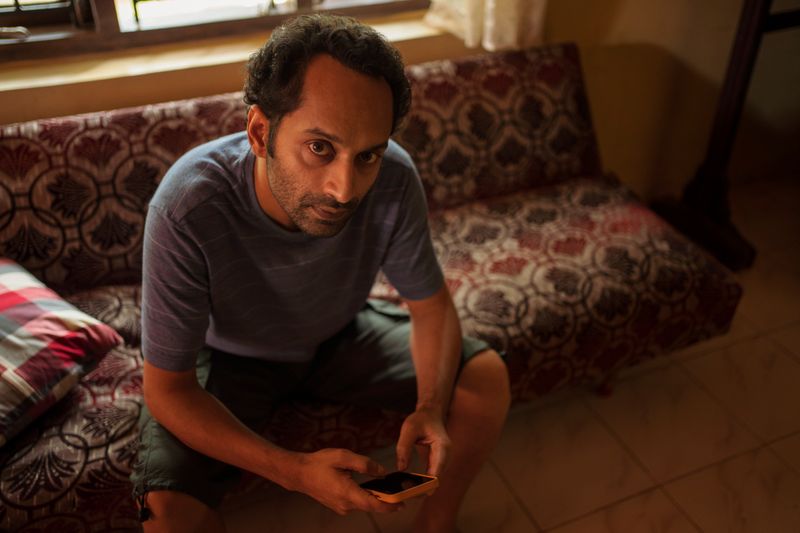
Actor Fahadh Faasil in Amazon Prime Video's 'Joji' Image Credit: Amazon Prime Video

“There’s a whole lot of new younger filmmakers, writers, actors, and technicians now. Filmmaking has just become more accessible. Anybody with a mobile phone can make now make a film today and Malayalam cinema has benefited the most because we have started to do what we are best at,” said Prithviraj, who turned director with the Mohanlal blockbuster ‘Lucifer’ in 2019.

The long-enduring actor — with blockbusters such as the riveting cop drama ‘Mumbai Police’ or the hustler fest ‘Indian Rupee’, and his testosterone-charged ‘Ayyappanum Koshiyum’ to his credit — is equally thrilled that ‘Cold Case’ will soon premiere on an Over-The-Top (OTT) platform. Kerala, like the rest of India, is grappling with a savage second wave of COVID-19 with cinema halls downing the shutters indefinitely in several Indian cities.

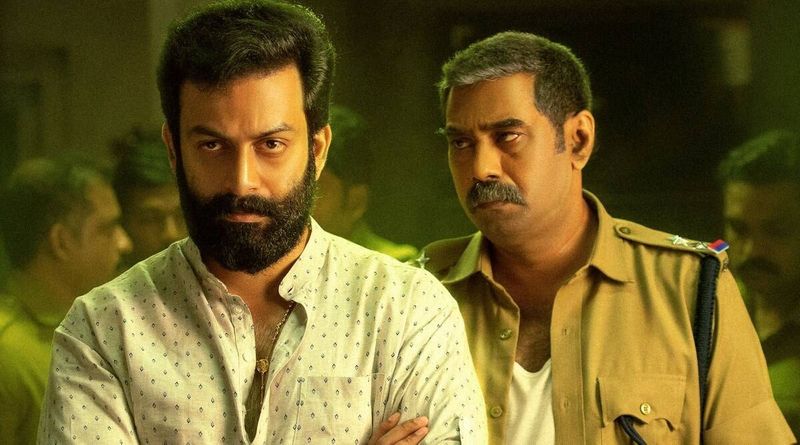
Prithviraj and Biju Menon in 'Ayappanum Koshiyum' Image Credit: Netflix

The pandemic has forced filmmakers across the world to re-consider their options on how to release their completed films and many are coming up with enterprising ways to roll out their films to the public.

“In the past year, we have realised the value of having these OTT platforms,” said Prithviraj.

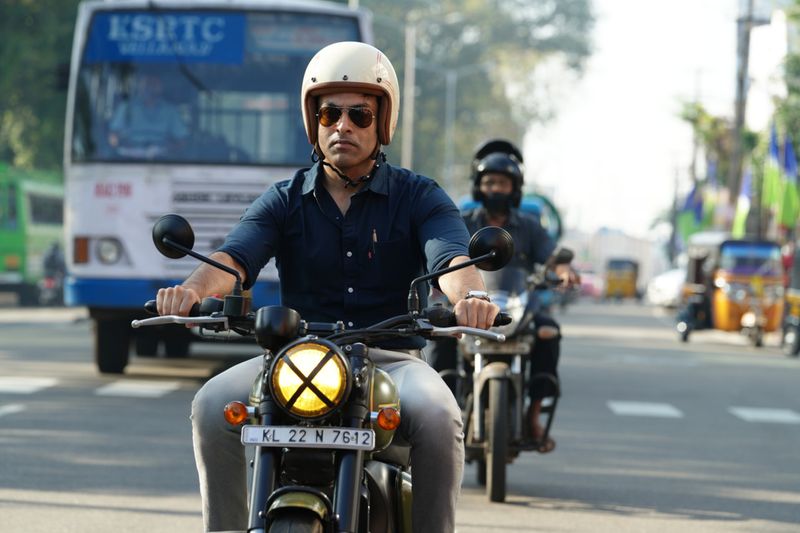
Prithviraj turns cop in 'Cold Case' Image Credit: Amazon Prime Video

Excerpts from our interview with Prithviraj as we talk about his latest murder mystery ‘Cold Case’, filming during the pandemic, and more …

Why should we watch ‘Cold Case’ and how will you sell it to us?

I don’t sell films. I act and direct them. But I can tell you why I acted in ‘Cold Case’. It struck me as an interesting script. It’s a story that travels in different paths. It’s not a whodunit alone, but it’s also about how did he do it.

There’s a police investigation that progresses based on logic, facts, inferences, and evidence. I play the police officer Satyajith. But there’s another path led by a journalist (Aditi Balan) who begins encountering things that cannot be explained with logic. There is paranormal activity and supernatural forces at work, but one path does not negate the other.

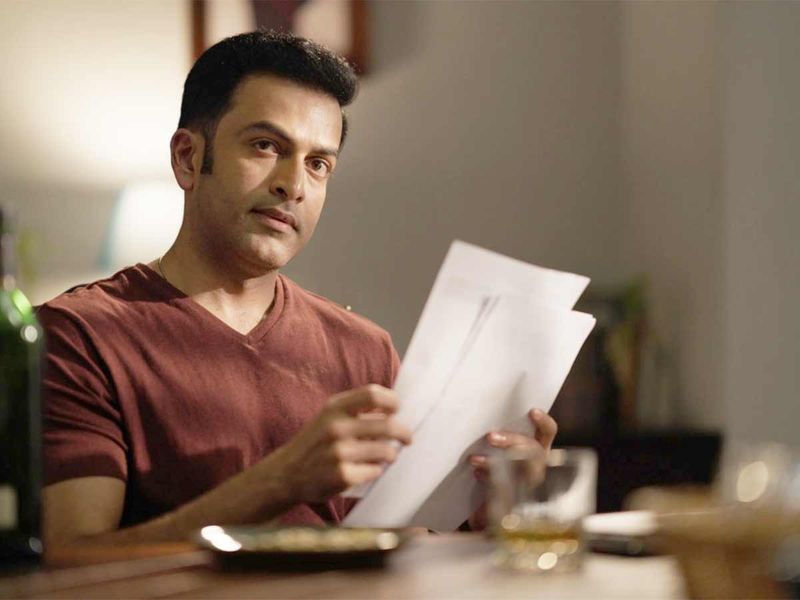
Prithviraj in 'Cold Case' Image Credit: Amazon Prime Video

Was the film shot during the pandemic?

It was shot during the pandemic and it was my first film that was shot keeping in mind the COVID-19 regulations and restrictions. It was very new for me because it was my first time seeing everyone masked and observing social distancing. There were sanitisation stations every 10 meters. Everybody was following strict regulations, but the shoot was smooth.

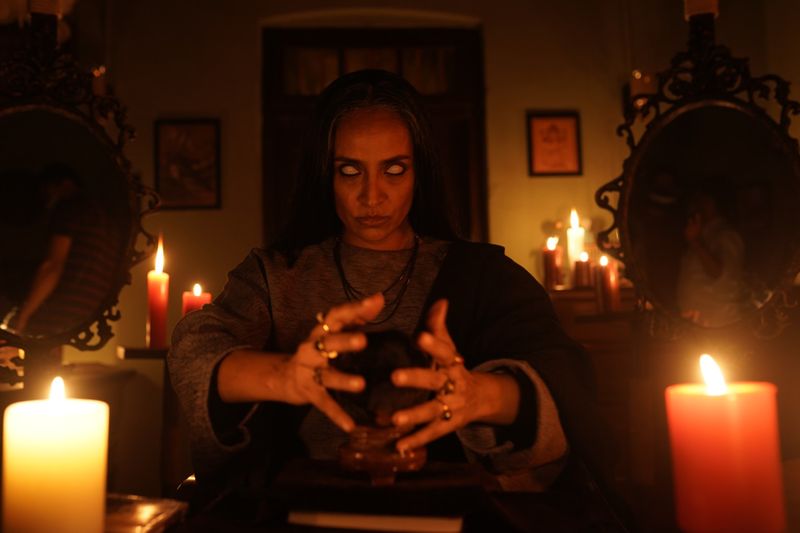
Actress Suchitra Pillai in 'Cold Case' Image Credit: Amazon Prime Video

Was ‘Cold Case’ designed as a web release or was the decision to release it on a streaming platform taken because of the times we live in?

A: It was the latter and was not designed to release on an OTT platform. When we made this film we thought this movie would be subjected to community viewing where hundreds of people together and watch it. But given the circumstances, I don’t think there is a better exhibition platform for this film than Amazon Prime Video because it’s a whole different level of reach than a theatrical release.

We screen in over 240 countries with people being able to sit in the safety of their own homes and watch this movie at their convenience. It’s a great proposition given the circumstances. Not just that, I don’t know how we can as a team appear in front of the camera and tell people: ‘go on to the theatres with your family and watch this film.’ I don’t know if that’s a responsible request to make. Given all that there is in front of us, the best thing that could have happened for ‘Cold Case’ is that it premieres on Amazon Prime video.

The title of your thriller seems to suggest that a case has gone cold. Are you reviving an old investigation here?

Cold is often a term used to describe something that has reached a dead-end or when the trail or your leads have gone cold. So, it holds true that way. It’s just that the case has gone more or less cold, but it suddenly becomes active again. But there is also another reason why the word ‘cold’ is used in this film. Unfortunately, I can’t dive into that right now until the film releases.

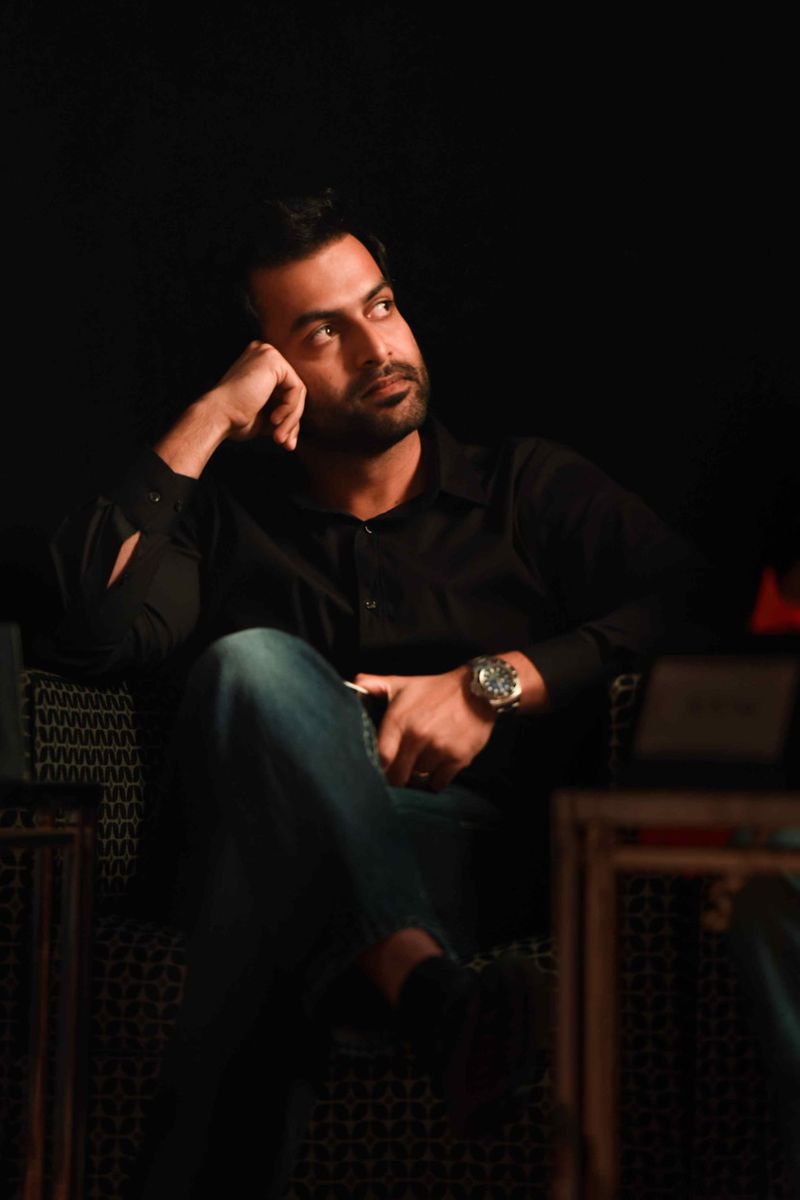
Prithviraj Image Credit: Antonin Kelian

At this point in your burgeoning career, what do you look for in a film — is it just the potency of the script?

I would like to believe that any actor would look for first for a script that manages to your attention till the end. In this genre, what you look for is your need to know what’s going to happen till the end. And, that’s what makes that film significant. ‘Cold Case’ held all our interests. But it’s not a film that I got attracted to because of the character I played. Satyajit, the cop, is merely a character in this plot. But it’s a character in an interesting plot. Plus, I am happy that my saying yes to this project facilitated this film to be made because it deserves to be made.

The pandemic has been tough for everyone globally. How did you survive these two years?

People like us are the privileged ones because we get to put our legs up and watch series and films on web platforms. When you say the film industry, you just perceive it as a place belonging to actors or the fortunate lot that had the resources to get through the pandemic. But remember there are thousands of daily wage workers who aren’t as fortunate.

While I understand that the entertainment industry is not the priority, we are hoping that when the industry opens up there are thousands who will find a living through this industry. So for the sake of everybody, I hope we find a way to reopen this industry. On the plus side, if we make a good film we still have an opportunity to show it to people.

Read More:

Streaming platforms tend to give directors and actors more space to perform. Your thoughts?

There’s a difference between making content for community viewing and viewing something in your private space. When you talk about community viewing, we are thinking of a group or family taking the time to go somewhere, finishing the film, and getting back to something else. So you don’t want to sit in a theatre for over four hours and therefore as a filmmaker you think of ways to compress your narrative and to dwell on absolutely necessary moments. But when you decide to make a film, a documentary, or a series that is going to premiere on an OTT platform, then you know that people are going to watch it on their own time and we have a lot more liberty.

I can choose to dwell on moments because I am going to make sure that viewers also spend time with me on that. It’s creatively very liberating and it’s financially great for our industry. We can diversify … So filmmakers and producers are going to start thinking differently and that’s exciting.

“Anybody is free to post a review on their social media or any other platform. If you don’t like the film, you can say you don’t like it. But I request the reviewer — both professional or otherwise — to make sure that you say that it’s your personal opinion. You have absolutely no right to say: ‘Don’t watch that film.” – Prithviraj

Prithviraj

Did you know?

Prithviraj still believes that star-driven filmmaking isn’t behind them entirely. After having completed more than a decade in Malayalam cinema, the son of legendary actor Sukumaran believes that his biggest clout currently is his ability to command producers to back projects due to the clout he has built over the years as a performer.

Don’t Miss It!

'Cold Case' is out on Amazon Prime Video on June 30


from World,Europe,Asia,India,Pakistan,Philipines,Oceania,Americas,Africa Feed https://ift.tt/35XHUHo

It is possible to give people of Jammu and Kashmir relief immediately: Omar Abdullah

Omar Abdullah, the former Chief Minister of Jammu and Kashmir (J&K), was part of a bunch of top political leadership from Jammu and Kashmir that met Narendra Modi, India’s Prime Minister, in a high-level meeting in New Delhi recently.

It was for the first time since August 5, 2019 (when the erstwhile state’s political autonomy, enshrined in Article 370 of India’s constitution, was abrogated by Modi government) that the leaders from J&K came face to face with the Prime Minister and Amit Shah, India’s Home Minister.

In a Zoom meeting with Gulf News, Omar Abdullah, gave an insight into what happened at the much-anticipated meeting, the legal fight over Article 370, his own political plans and the plight of the people in J&K.

Excerpts from the interview:

What were your expectations going in the meeting with the Prime Minister?

I did not attend the meeting with any expectations. Given that very few of us (political leadership in J&K) have had any contact with the government of India, much less at the level of the Prime Minister, since August 2019, this meeting was more in the nature of an ice breaker.

It gave us an opportunity to tell the Prime Minister how we felt and how we thought the people of Jammu and Kashmir felt post the scrapping of the state’s special status.

This meeting was just a beginning. The Prime Minister acknowledged that a vast gulf exists between Jammu and Kashmir and the rest of India. He talked about Dilli se doori and Dil ki doori (gap between J&K and Delhi and also a distance in hearts), which needs to be addressed.

We told the Prime Minister in no uncertain terms that people are not happy with the events of August 2019. All political parties were clear in making this known to our hosts.
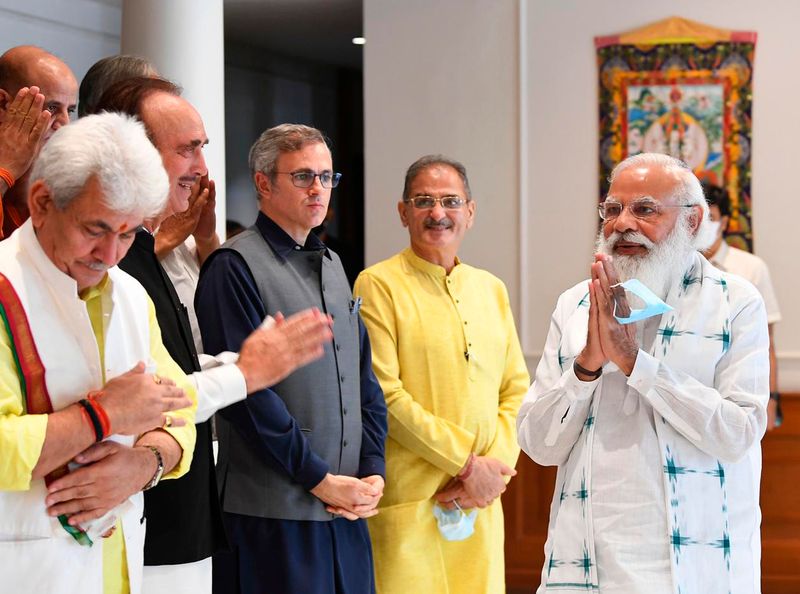
Omar Abdullah along with a host of top political leaders met with Narendra Modi in New Delhi on June 25, 2019 Image Credit: AP

You met Modi in August 2019. A lot changed in the interim. How was it like facing him for the first time in nearly two years after you were imprisoned?

It was almost surreal because not long ago we were detained by the government and our detentions were justified using all sorts of claims. In my case, for instance, the Public Safety Act detention was justified saying that I had mobilised people to vote in the face of an election boycott!

I would be lying if I said that it was all completely as if nothing had happened. Like I told you it was surreal to begin with but the fact is that we (as leaders) have a responsibility beyond ourselves.

The Prime Minister of India reached out to us for a dialogue and it was absolutely the correct thing to do — and respond positively to the dialogue.

I will never forget what I went through (during my imprisonment) but I’ve always said it’s not about an individual. It is about the wider cause we are fighting and what individually may have happened to me or my father (Dr Farooq Abdullah, Member of Parliament) or Mehbooba Mufti (Former Chief Minister) or to many others, doesn’t matter.

What is important that we keep the channels of communication open.

Why is the government of India insisting on delimitation in J&K?

I think that’s a question which the government of India can better answer. I can hazard a guess but is only a guess and I think it’s because of the political constituency that the BJP has cultivated — particularly in parts of Jammu.

Otherwise there is no legal or constitutional reason why J&K should be singled out with delimitation when the rest of the country is going for delimitation in 2026. We are already in 2021. Our delimitation will take place on the basis of data that is 10 years old.

Whereas rest of the country goes for delimitation in 2026 (based on the 2021 census), so already there will be discrepancy between the rest of the country and J&K. This is a question for the BJP to answer that if the entire exercise of August 5, 2019 was to bring J&K at par with the rest of the country, why then single out J&K for delimitation?

We want the restoration of full statehood before any move towards holding elections in J&K. Congress leader Ghulam Nabi Azad made the intervention towards the end of the meeting. It is something we will continue to press for.

Delimitation
The Delimitation commission is an independent body tasked to redraw the boundaries of the various assembly and Lok Sabha constituencies based on the census of India.

You have said recently that there is no indication that Article 370 will be restored. That sounds accommodative and some contend that rather than taking this government head-on like Mamata Banerjee, you may have lowered the bar. Your comments?

No absolutely not. I think there are two ways to go about this — I can either fool people or I can be honest with them.

Please tell me by which convoluted logic these commentators believe that Prime Minister Narendra Modi will return Article 370 having taken it away two years ago? What indications do they have on which to base this highly optimistic position?

If political parties in Kashmir had been given a mandate like Mamata Banerjee was given, events on August 5, 2019 would never have happened.

I have always been saying: Look you don’t like the National Conference, don’t support it but don’t divide your vote, don’t weaken your voice, choose a political party and give it your support.

If Mamata Banerjee, for instance, had ¼ the support that she has in the assembly, would she be able to talk in this way? She talks from a position of strength because people have given her that position.

Unfortunately commentators who are passing judgement on what I said have done nothing but weakened the legitimate voice of the people of Jammu and Kashmir.

They have put us in this position through their support for boycott calls and support for confused politics. Let them throw their weight behind a political party and give that party a ⅔ political majority in the assembly and then see what we can achieve.

I am not suggesting that we will not continue our struggle but we have to know where to take that fight. We have to know where to make that demand and wisdom demands that we choose the right place and the right time.

Please remember it took the BJP/Sangh parivar 70 years to fulfil their agenda of abrogating Article 370. Do our so-called commentators seriously believe that one meeting will get it back for us?

When I talk about full statehood to J&K, we think there are certain changes we can make that will give relief to people — relook at domicile, land laws, job reservation

Omar Abdullah

The Supreme Court of India didn’t take up the case related to Article 370 in two years. How do you assuage the anxiety in people?

It does make us anxious and we would have hoped that it the Supreme Court would have started the process by now but please understand that hardly any processes are working in the country right, which has gone through two very bad phases of COVID-19 and all normal functioning has been derailed.

It is only emergency matters that have been taken up by the court and also we don’t want virtual hearings. This is too important a matter to be consigned to virtual court hearings. We want physical court hearings where we can make our case properly to the honourable judges of the Supreme Court.

If we have to wait a few weeks or months longer, we shall wait, it is a fight worth waiting for. Let’s not do things in a hurry and then end up with a result no one wants.

Will you contest the upcoming elections in Jammu and Kashmir?

Look I am not power hungry. I have no deep rooted desire to be in the position of the Chief Minister. I have already been the Chief Minister for six years. For the time being I have no intention of fighting elections and that’s how it shall be.

How do you feel about the India-Pakistan peace initiatives?

As a party (National Conference) we have always advocated good relations between India and Pakistan. We have often reminded our friends in the BJP that it was Prime Minister Vajpayee who said that we can change friends, we can’t change our neighbours.

Relations must improve and the responsibility for creating a conducive atmosphere for dialogue rests with both India and Pakistan. Both nations must approach it with the seriousness that it deserves and hopefully we can take a visible process forward.

Kashmiris are anxious and that is quite apparent when one talks to the common people on the street. Where do we go from here?

That’s an important point. If you were to take the opinion of people who are critical of anything other than talk of Article 370, then people of J&K will just have to suffer but I sincerely believe that it is possible for us to give people an element of relief immediately, while also fighting the wider fight for getting back from what was taken from us on August 5, 2019.

I may not want to fight the assembly elections myself, but I do understand that having an elected government with elected representatives will allow great relief to people from exactly the sort of things that you mentioned.

We are an open air prison because we don’t have an elected government. There is no one accountable for the wider population.

Take for instance the case of a District level officer who had an individual arrested simply because the person said a local official can better understand him (that an officer from outside the state). It is inconceivable that something like that would happen with an elected government.

While we continue to wage our struggle for the wider cause, which is the restoration of our special rights, we must also look to take relief where we can get it.

When I talk about full statehood to J&K, we think there are certain changes we can make that will give relief to people — relook at domicile, land laws, job reservation.

Everyday system of fear of detention, transfers, unaccounted governance has to end.


from World,Europe,Asia,India,Pakistan,Philipines,Oceania,Americas,Africa Feed https://ift.tt/3hmBlDo

COVID-19: Social gatherings and not returning migrants caused the spread in Indian city

Patna: Weddings, social functions and lack of social distancing, rather than the returning migrant workers, caused the spread of COVID-19 infections in Bihar’s capital city of Patna, a study has said.

More than three million migrants who returned to the state since last year’s nationwide lockdown have been blamed for the spread of infections.

The study titled “Learning From COVID-19 cases — A Sociological Study of Patna District, Bihar” said despite the return of a large number of migrants, there had not been any major spread of virus due to them. “The BDOs (block development officers) also confirmed that there had not been,” said the study done by a former bureaucrat KC Saha who served in many capacities in Bihar and at the federal government.

In view of the Covid outbreak in the country, the national lockdown was enforced from March 24, 2020 to May 31, 2020. The study said the migrants faced untold hardship during their return. They were quarantined in isolation centres and were allowed to go to their villages only after the quarantine period of 14 days. Some migrants might have reached their villages bypassing the Isolation centres. “In many villages, the Mukhiyas (village council chiefs) and other villagers did not allow the migrants to go to their homes directly and insisted that they stayed in isolation centres set up in the villages,” the study said.

According to the study, intermingling of people in busy markets, marriages and other social functions largely contributed to the spread of the disease. “The infection amongst women increased during marriages due to the custom of singing in groups for a few days before the wedding,” the study claimed.

The 32-page study made startling revelations about how the spread of infection was negligible in slum areas but “severe in towns”. The data of 23,344 positive cases of Patna town analysed during the study suggested that COVID-19 virus spread had been severe in the town, but it mentioned a very interesting phenomenon.

“None of the slums reported a single case of COVID-19 whereas many VIP areas of the town confirmed a number of cases. Except for 3-4 persons, none of the 7,300 sanitary staff of the PMC (Patna Municipal Corporation) who mostly stay in slums or their family members had been affected by COVID-19,” said the study.

According to the study, lack of social distancing and people’s negligence in using face masks contributed towards the second wave in Patna. During the second wave, the migrant labourers did not return to Bihar in large numbers but many families returned during the Holi festival, it said.

The study revealed there had been a crisis of hospital beds and other support due to the sudden surge in the number of cases from April 15, 2021 to May 1, 2021, but the situation eased due to the steps taken by the State Government.

At the same time, the study made certain recommendations to strengthen efforts to handle such pandemics in future. The study said it would be useful to prepare Health Disaster Management Plans and Standard Operating Procedures (SOPs) based on the experience of COVID-19 and continuously updating those plans based on new evidence to enhance epidemic preparedness in the state. The SOPs should include the constitution of the Emergency Operating Centre and the Technical Advisory Com-mittee at the State and the District level.

The study also suggested setting up additional Primary Health Centres, strengthening of existing Primary Health Centres, Community Health Centres and district hospitals.


from World,Europe,Asia,India,Pakistan,Philipines,Oceania,Americas,Africa Feed https://ift.tt/3jIDegP

testhjg