Wednesday, 1 December 2021

Pakistani soldier Muhammad Shafiq martyred in Central African Republic: ISPR

Pakistani soldier Muhammad Shafiq martyred in Central African Republic: ISPR
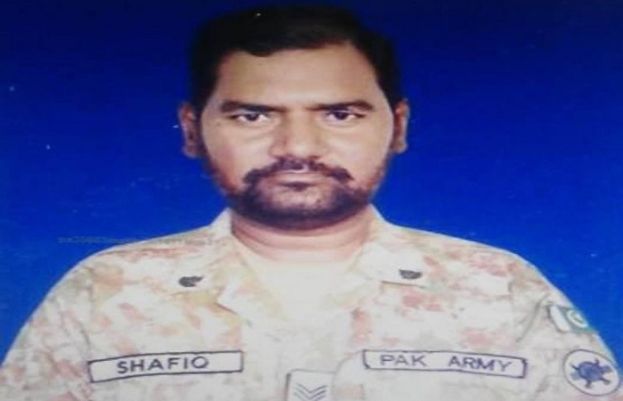
A Pakistani soldier embraced martyrdom while serving in a United Nations' (UN) peacekeeping mission in the Central African Republic, revealed the Inter-Services Public Relations (ISPR) Thursday.

The military's media wing issued a statement saying that the soldier, Hawaldar Shafiq, was laid to rest with full military honours at his funeral held in Mian Chunnu, Pakistan.

The ISPR revealed that the martyred soldier is survived by his wife and three sons. He joined the UN peacekeeping mission in February 2021, it added.

The ISPR said 162 soldiers have been martyred so far while serving in the UN's peacekeeping missions.


source https://www.suchtv.pk/pakistan/general/item/109882-pakistani-soldier-muhammad-shafiq-martyred-in-central-african-republic-ispr.html

Pakistan reports 377 coronavirus cases, 8 deaths in 24 hours

Pakistan reports 377 coronavirus cases, 8 deaths in 24 hours
Pakistan has reported 8 deaths in the last 24 hours by novel coronavirus as the number of positive cases has surged to 1,285,631. The nationwide tally of fatalities has jumped to 28,745 on Thursday.

According to the latest figures issued by the National Command and Operation Center (NCOC), 377 persons were tested positive for COVID-19 in the past 24 hours.

Pakistan has conducted 44,137 tests in the past 24 hours out of which 377 persons were tested positive for the disease. The COVID Positivity Ratio was recorded at 0.85 percent.


source https://www.suchtv.pk/pakistan/general/item/109881-pakistan-reports-377-coronavirus-cases-8-deaths-in-24-hours.html

Afghanistan faces 'unprecedented' economic shock: UN

Afghanistan faces 'unprecedented' economic shock
Afghanistan's GDP could contract 20 per cent within a year, the UN predicted in a new report on Wednesday, saying that the withdrawal of international aid after the Taliban's return to power is an "unprecedented fiscal shock."

For decades now Afghanistan's economy has been undermined by war and drought.

But it was propped up by billions in international aid -- much of which was frozen when US-led international forces withdrew and the Taliban returned to power in August.

"The sudden dramatic withdrawal of international aid is an unprecedented fiscal shock," United Nations Development Programme (UNDP) Asia Director Kanni Wignaraja told AFP on Wednesday, as the agency released its Afghanistan Socio-Economic Outlook 2021-2022.

The report predicts an economic contraction of around 20 per cent of GDP "within a year, a decline that could reach 30 per cent in following years."

"It took more than five years of war for the Syrian economy to experience a comparable contraction. This has happened in five months in Afghanistan," Wignaraja said.

Another UN source said that, "in terms of population needs and weakness of institutions, it is a situation never seen before. Even... Yemen, Syria, Venezuela don't come close."

Previously, international aid represented 40 per cent of Afghanistan's GDP and financed 80 per cent of its budget.

But even reinstating aid now, while crucial, would be a "palliative" move, Wignaraja said, adding that what Afghans need are "jobs, being able to learn, be able to earn and to be able to live with dignity and safety."

The report also warned that depriving women of paid work in Afghanistan could fuel a GDP drop of up to five per cent, representing a loss of wealth of $600 million to $1 billion.

The Taliban have allowed only a portion of female civil servants -- those working in education and health -- to return to work, and have been vague on what the rules will be in the future.

In the past, they banned women from working.

"Women constitute 20 per cent of formal employment, and their jobs are vital to mitigate the economic catastrophe in Afghanistan," Wignaraja told AFP.

The damage "will be determined by the extent of enforcement or the delay", the report notes.

In addition, there is a loss in consumption -- women who no longer work no longer have a salary and can no longer buy as much as before to feed or equip their homes - which could reach $500 million per year, according to the UNDP.

Afghanistan "cannot afford to forfeit this", Wignaraja said.

Young Afghan women must also be able to continue post-secondary education, Wignaraja said.

That means any education that "will help them ... to contribute as they can and wish as doctors, nurses, teachers, engineers, civil servants or to run their businesses and build back the country."


source https://www.suchtv.pk/world/item/109875-afghanistan-faces-unprecedented-economic-shock-un.html

Courts block two Biden administration COVID vaccine mandates

president Joe Biden
The Biden administration was blocked on Tuesday from enforcing two mandates requiring millions of American workers to get vaccinated against COVID-19, a key part of its strategy for controlling the spread of the coronavirus.

US District Judge Terry Doughty in Monroe, Louisiana, temporarily blocked the Centers for Medicare & Medicaid Services (CMS) from enforcing its vaccine mandate for healthcare workers until the court can resolve legal challenges.

Doughty’s ruling applied nationwide, except in 10 states where the CMS was already prevented from enforcing the rule due to a prior order from a federal judge in St. Louis.

Doughty said the CMS lacked the authority to issue a vaccine mandate that would require more than 2 million unvaccinated healthcare workers to get a coronavirus shot.

“There is no question that mandating a vaccine to 10.3 million healthcare workers is something that should be done by Congress, not a government agency,” wrote Doughty.

Separately, US District Judge Gregory Van Tatenhove in Frankfort, Kentucky, blocked the administration from enforcing a regulation that new government contracts must include clauses requiring that contractors’ employees get vaccinated.

The contractor ruling applied in the three states that had filed the lawsuit, Kentucky, Ohio and Tennessee, one of at least 13 legal challenges nationwide against the regulation. It appears to be the first ruling against the contractor vaccine mandate.

The White House declined to comment.

The legal setbacks for President Joe Biden’s vaccine policy come as concerns that the Omicron coronavirus variant could trigger a new wave of infections and curtail travel and economic activity across the globe.

Biden unveiled regulations in September to increase the US adult vaccination rate beyond the current 71% as a way of fighting the pandemic, which has killed more than 750,000 Americans and weighed on the economy.

Republican state attorneys general, conservative groups and trade organizations have sued to stop the regulations.

Tuesday’s rulings add to a string of court losses for the Biden administration over its COVID-19 policies.

The most sweeping regulation, a workplace vaccine-or-testing mandate for businesses with at least 100 employees, was temporarily blocked by a federal appeals court in early November.

In August, the US Supreme Court ended the administration’s pandemic-related federal moratorium on residential evictions.


source https://www.suchtv.pk/world/item/109874-courts-block-two-biden-administration-covid-vaccine-mandates.html

Saqlain to carry on as Pakistan head coach for West Indies series

Former Pakistani cricketer Saqlain Mushtaq
Former Pakistani cricketer Saqlain Mushtaq will continue his job as the interim head coach of the national squad for the upcoming West Indies series, slated to kick off on December 13.

West Indies will be touring Pakistan for 15 days to play T20 and one-day international series.

“Saqlain will continue to be the interim head coach of the national cricket team for the limited overs series against West Indies,” a Pakistan Cricket Board (PCB) official said.

The PCB, however, has yet to decide on bowling and batting coaches for the forthcoming series. “In a few days we are to make a decision on that. One thing is certain that Saqlain will continue to be the head coach of the team for the series against West Indies,” the official said.

PCB is expected to make a decision on the permanent Pakistan head coach during Pakistan Super League (PSL) engagements — most probably in February.

Australia are scheduled to tour Pakistan in March 2022. Before that, the PCB is expected to announce a new head coach for the long term.


source https://www.suchtv.pk/sports/item/109873-saqlain-to-carry-on-as-pakistan-head-coach-for-west-indies-series.html

WHO Omicron warning for unvaccinated vulnerable travellers

WHO Omicron warning for unvaccinated vulnerable travellers
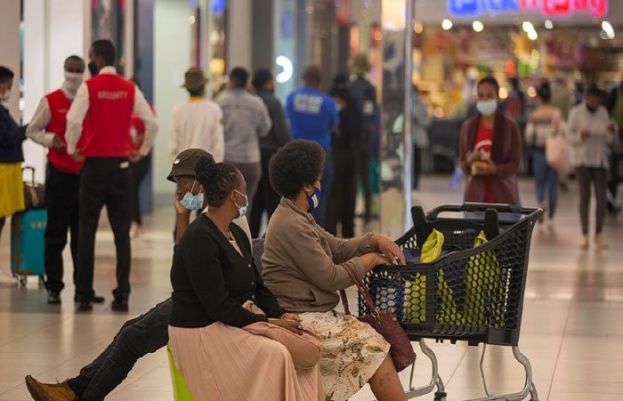
The WHO said Tuesday that those not fully vaccinated against Covid-19 who are also vulnerable to the disease, including over-60s, should put off travel to areas with community transmission.

The World Health Organization also said blanket travel bans would not stop the spread of the Omicron variant.

The new Covid-19 variant of concern, which the WHO says poses a "very high" risk globally, has prompted many countries to shut their borders.

"Blanket travel bans will not prevent the international spread, and they place a heavy burden on lives and livelihoods," the WHO said in a travel advice statement on Omicron.

"In addition, they can adversely impact global health efforts during a pandemic by disincentivising countries to report and share epidemiological and sequencing data."

First reported to the WHO less than a week ago after being detected in southern Africa earlier this month, Omicron has already appeared in several countries.

The WHO noted the increasing number of governments introducing travel measures, including temporarily banning arrivals from countries where the variant has been found.

The WHO said that as of Sunday, 56 countries were reportedly implementing travel measures aimed at potentially delaying the importation of the new variant.

"It is expected that the Omicron variant will be detected in an increasing number of countries as national authorities step up their surveillance and sequencing activities," it said.

The WHO later issued a correction to the final part of that travel advice, relating who should be advised to postpone travel, and to where.

"Persons who have not been fully vaccinated or do not have proof of previous SARS-CoV-2 infection and are at increased risk of developing severe disease and dying, including people 60 years of age or older or those with comorbidities that present increased risk of severe Covid-19 (e.g. heart disease, cancer and diabetes) should be advised to postpone travel to areas with community transmission," the WHO's corrected line said.

Elsewhere, the WHO advised countries to apply an "evidence-informed and risk-based approach" when implementing travel measures.

The UN health agency said national authorities in countries of departure, transit and arrival could apply mitigation measures that might delay or reduce the exportation and importation of the variant.

They could include screening passengers, testing and quarantine.

"All measures should be commensurate with the risk, time-limited and applied with respect to travellers' dignity, human rights and fundamental freedoms."

The WHO said that "essential international travel", including for humanitarian missions, repatriations and transport of vital supplies, should always be prioritised during the pandemic.

- 'Calm, coordinated, coherent' -

Earlier Tuesday, WHO chief Tedros Adhanom Ghebreyesus told member states to keep calm and take "rational" steps in response to Omicron.

"We call on all member states to take rational, proportional risk-reduction measures," he said.

"The global response must be calm, coordinated and coherent."

Tedros stressed that it remains unclear how dangerous the variant is.

"We still have more questions than answers about the effect of Omicron on transmission, severity of disease, and the effectiveness of tests, therapeutics and vaccines," he said.

The WHO chief said it was understandable that countries wanted to protect their citizens "against a variant that we don't yet fully understand".

"But I am equally concerned that several member states are introducing blunt, blanket measures that are not evidence-based or effective on their own, and which will only worsen inequities."


source https://www.suchtv.pk/health/item/109872-who-omicron-warning-for-unvaccinated-vulnerable-travellers.html

Samsung starts producing mobile phones in Pakistan

Samsung
One of the world’s largest manufacturers of mobile phones, Samsung, has finally started production in Pakistan, lifting hopes of the authorities and the industry that this would cut down the import bill of the country in the months to come.

The development came to light on Tuesday at a meeting of the company’s top managers with the Senators who visited the production site in line with the plan to receive a briefing on the growing new sector and challenges ahead for the cellphones manufacturing industry in Pakistan.

“We were informed that Samsung has formally started its production,” Faisal Subzwari, chairman of the Senate’s Standing Committee on Industries and Production.

He headed a delegation of members of the Senate panel which visited Samsung’s production unit and an auto manufacturing plant, and held a meeting with the management of Export Processing Zone.

“It’s really good to know that the company has started production within a short span of four months,” Mr Subzwari said. “We visited the production facility which was designed on modern lines and obviously the local manpower, support of local industry and conducive environment provided by the government led to such achievement. But still I believe that we need to move forward from just growing in the assembling area to localisation of the industry.”

The country has witnessed robust growth in local production of cellular phones. During the first 10 months of this year, the Pakistan Telecommunication Authority (PTA) data says, the production of mobile phones by local manufacturing plants has almost doubled to 18.87 million against the import of mobile phones which stood at 45m.

However, despite the increase in local production of mobile phones, the import remained on a higher side. The PTA data says that mobile phones worth $644.673m were imported during the first four months (July-October) of 2021 compared to $557.961m during the same period of last year, registering a growth of 15.54 per cent.

The industry believes that it may take time to achieve the desired results but with the fresh start in an absolutely new industrial avenue, things have finally started moving in the right direction.

“With production of around 250,000 to 300,000, we aim to produce around 3m cellphones every year,” Mohammad Ali Tabba, chief of the Lucky Group which partners with Samsung to produce cellphones in Pakistan. “The whole production line is manual with no robotic assistance. So you can imagine how much workforce is required offering employment in this absolutely new area of engineering in Pakistan.”

He agreed that the country needed to move towards localisation from its current status of assembling industry and believed it was more the role of the industrial sector than the government to go for modification and compatibility.


source https://www.suchtv.pk/technology/item/109871-samsung-starts-producing-mobile-phones-in-pakistan.html

testhjg